In the face of rising energy expenses, commercial and industrial end users are turning to creative strategies to reduce costs. Energy storage is quickly emerging as a prominent solution to many of these problems. Battery energy storage systems (BESS), specifically, are being deployed rapidly into commercial and industrial environments for a variety of practical applications, including peak demand management, backup power, demand response, and capacity tag management. In this article, we will outline the role of BESS in commercial applications, potential energy cost savings, and return on investment for end users.
The Role of Battery Energy Storage Systems (BESS) in Commercial Energy
Commercial BESS systems work by integrating into a facility’s existing power infrastructure in order to supply electricity during critical periods. If engineered properly, these systems can also participate in wholesale energy markets by connecting directly to local grid infrastructure and dispatching power back to the grid, becoming an additional revenue stream. This article will outline how BESS assets work in commercial applications, specific business use cases, and how businesses can utilize these assets to save on energy costs and generate profit.
What Is a Battery Energy Storage System?
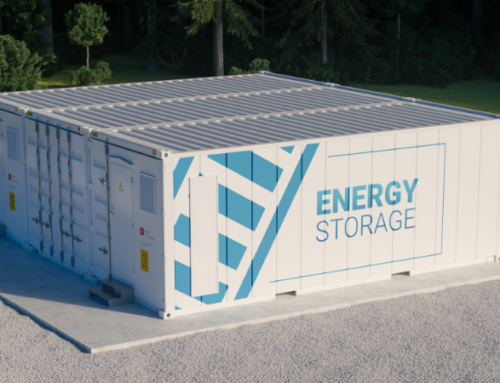
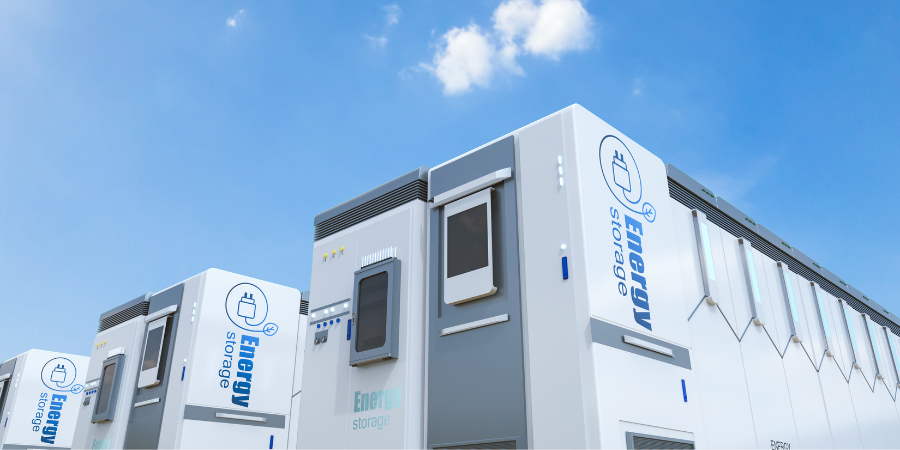
A battery energy storage system is made up of battery cells, modules, racking systems, inverters, transformers, and interconnected circuits. These systems can be installed on-site at commercial and industrial facilities to help supply electricity. Unlike traditional backup generators, which are typically powered by diesel fuel or natural gas, batteries charge themselves by connecting to grid infrastructure or on-site renewable energy generation, and dispatch energy when needed. These systems are quickly becoming the most popular form of energy management systems (EMS) for commercial and industrial customers due to their ease of deployment and fast-reacting components.
How BESS Works in Commercial Applications
In a typical commercial application, a BESS unit will charge by utilizing on-site electrical power or solar energy. The energy is then stored in the battery unit and discharged for use when the facility calls on the battery. Many facilities utilize sophisticated control software to charge and discharge the battery in accordance with their unique energy strategy. For example, a business looking to reduce demand readings related to capacity tags might discharge the battery during anticipated coincident grid hours. Businesses with BESS systems are starting to take their capabilities into account when developing an energy procurement strategy, as the BESS system can help the business qualify for lower supply rates by shifting usage away from expensive, on-peak hours.
Benefits of Battery Energy Storage for Businesses
There are several direct benefits of implementing a battery energy storage system at your facility, including:
Reduced Energy Costs
First and foremost, most commercial and industrial organizations are turning to BESS as a means of directly reducing energy costs. By charging the battery system during low-cost, off-peak hours and dispatching energy during peak periods, the business can benefit in several ways.
Pay less per kWh
If the battery is charged at $40/MWh and dispatched during a peak hour priced at $80/MWh, the facility effectively pays $40/MWh for that hour. Important note: the business must be utilizing some sort of hybrid energy supply product, such as a block + index plan, in order to take advantage of this arbitrage. Fully-bundled fixed energy contracts do not allow the business to differentiate between on and off-peak hours.
Energy Resilience
Another key aspect of having a battery at your facility is the ability to utilize the system for backup power. If there is an outage, the battery can be discharged to cover some or all of the facility’s load. If managed properly, this can be a more cost-effective way of deploying backup generation when compared to more expensive fossil fuels (i.e. diesel generators). Please note that batteries used as a backup source must be sized properly and can only dispatch energy for predefined periods of time. They might not be ideal if the outage lasts longer than several hours, unless the system is powered by solar. See more below.
Renewable Energy Optimization
For businesses with on-site solar generation, batteries are a great complement. Solar systems work by turning sunlight into usable electricity; however, many businesses do not have enough electricity load to use all of the generated solar power during peak sun hours. In most cases, this excess energy is pushed back to the grid and credited to the consumer through a net metering arrangement with the utility company. For those facilities with a BESS system, the battery can store the excess energy from the solar arrays to be used at a later time. This helps to maximize the benefit of the solar system and helps to improve its ROI.
Revenue Generation
In some rare cases, the consumer can deploy their battery in the wholesale market by filing interconnection paperwork and connecting to local grid infrastructure. When the battery is not being used by the facility, it can participate in wholesale electricity market services, such as ancillary services, capacity, or energy markets, and earn revenue for the company. Please note that participating in the wholesale market requires careful planning and 24/7 operational management of the battery asset. Most companies elect to contract with a third-party battery operator to handle the day-to-day details. Furthermore, if the battery is committed in the wholesale market, it cannot be used to dispatch energy at the facility, unless enough capacity is available. This is an important note to keep in mind for facilities turning to batteries as their sole backup source.
Key Applications of BESS in Commercial Energy
Here are some practical examples of how a battery can be used in a commercial or industrial environment:
Peak Shaving
It’s summertime, and the facility just received an alert from its energy broker that tomorrow, between 2 PM and 4 PM, the grid is anticipating a coincidental peak event, where capacity tags might be measured. The facility could ensure that their battery is significantly charged and schedule it to dispatch the next day during the same window. This helps to reduce peak demand during this critical period and could, in turn, reduce the facility’s total capacity contribution, resulting in significant savings.
Energy Arbitrage
The business has deployed its BESS unit into the wholesale market and is utilizing the services of a wholesale battery operator. The battery is not being used to supply power to the facility today and is discharged into the wholesale energy markets during a peak hour at $120/MWh. The battery was charged the previous night at $30/MWh, and the facility receives a $90/MWh return/
Renewable Integration
An industrial facility installed a 1 MW rooftop and carport solar system to supply its 1.5 MW load; however, the facility typically only utilizes 800 kW of its solar generation due to most of its usage happening at night when the 2nd and 3rd shifts are in full swing, and solar is not producing. A battery system captures the excess 200 kW during the day and dispatches the power at a later time to help the solar system become more efficient.
Backup Power
A water treatment plant needs backup generation so that its motors can operate 24/7. It has historically relied on high-priced diesel fuel to run its backup generators. In addition to its existing generators, the facility elects to install a battery system for backup power that is also enrolled in wholesale market participation. If the facility needs backup power, and the battery is not committed to the wholesale market, it can discharge the battery for fast-response, low-cost power. When the asset is not being utilized as a backup resource, it is earning revenue in the wholesale market.
Demand Response
A university wants to participate in demand response to earn additional revenue. Due to the nature of its school calendar, the university’s summer electric load is 50% of its peak; however, demand is still significant (5 MW). They install a bank of batteries in an effort to offset 2 MW of demand and enroll in a demand response program. When the grid calls on the university to curtail usage each summer, it dispatches its batteries to reduce load and is paid each year for doing so.
BESS Technology Comparison Chart
| Battery Type | Key Feature | Cost Profile | Application |
|---|---|---|---|
| Lithium Ion | High efficiency, fast response | Medium | Most commercial BESS |
| Flow | Long duration, high cycle life | High | Long-duration use |
| Lead-acid | Low upfront cost | Low | Short-term backup |
| Solid state | High safety, energy density | High | Future C&I deployments |
The Financial Impact of BESS
Commercial bess applications have a typical payback period a 5 to 7 years, depending on an array of factors including retail electricity rates, system size and duration, demand charges, and wholesale market participation. A 1 MW 6-hour battery could potentially cost close to $1 million; however, wholesale market participation alone could generate approximately $150,000 to $250,000 per year in revenue. If the facility is also utilizing the battery to participate in revenue-generating demand response, the payback period could be better. Wholesale vs. retail market participation for the battery needs to be financially modeled in order to develop the best operating plan.
How Diversegy Helps Businesses Deploy Battery Energy Storage
Diversegy is a full-service energy management firm offering an array of cost-reducing energy strategies for our commercial and industrial customers. As demand-related costs continue to increase across U.S. electricity markets, our customers are turning to us for alternative strategies to reduce expenses. On-site battery storage systems are emerging as a key component of managing energy demand and expenses and fit into a larger energy procurement strategy. If you are looking for ways to structure your next electricity supply agreement around your battery asset or are interested in exploring BESS applications for your facility, you’ve come to the right place. Contact our team of energy experts today to learn more.
FAQs About Battery Energy Storage Systems
How do battery energy storage systems work for businesses?
Battery energy storage systems (BESS) store electricity for later use, allowing businesses to manage when and how they consume power. Energy is typically charged into the battery during off-peak hours when electricity prices are lower or when excess power is generated from on-site solar. The stored energy is then discharged during peak demand periods, grid outages, or high-price intervals to reduce utility costs and improve reliability. This charge-and-discharge cycle is managed automatically through intelligent control software.
What size BESS does a commercial facility need?
The size of a commercial BESS depends on several factors, including a facility’s peak demand, load profile, and operational goals. Smaller commercial buildings may only need a system sized to offset peak demand charges, while large industrial facilities may require multi-megawatt systems for load shifting, backup power, or renewable integration. A detailed energy analysis is typically required to determine the optimal system size. Oversizing or undersizing can significantly impact ROI.
How much money can battery storage save annually?
Annual savings from battery storage vary widely based on utility tariffs, retail energy rates, demand charges, and how the system is used. Many commercial users see savings from peak shaving alone, which can reduce demand and capacity charges by tens of thousands of dollars per year. Additional savings may come from energy arbitrage, demand response participation, and reduced reliance on backup generators. In markets with high demand charges or volatile pricing, battery storage can deliver strong and recurring cost reductions.
How long do commercial batteries last?
Most commercial battery systems, particularly lithium-ion batteries, are designed to last between 10 and 15 years, depending on usage and operating conditions. Battery lifespan is measured in charge cycles, with many commercial systems rated for thousands of cycles before performance begins to degrade. Proper system design and optimization can extend battery life and maintain efficiency over time.
Can BESS operate with both solar and the utility grid?
Yes, battery energy storage systems are commonly designed to operate with both on-site solar and the utility grid. In a hybrid configuration, the battery can store excess solar energy during the day and discharge it when solar production drops or energy prices rise. At the same time, the system can charge from the grid during low-cost periods. This flexibility allows businesses to maximize renewable energy use while maintaining reliable access to grid power.